Resources
Your Ultimate Resource Hub for Singapore Immigration
Browse through our library of informative resources to stay informed and inspired

Browse through our library of informative resources to stay informed and inspired
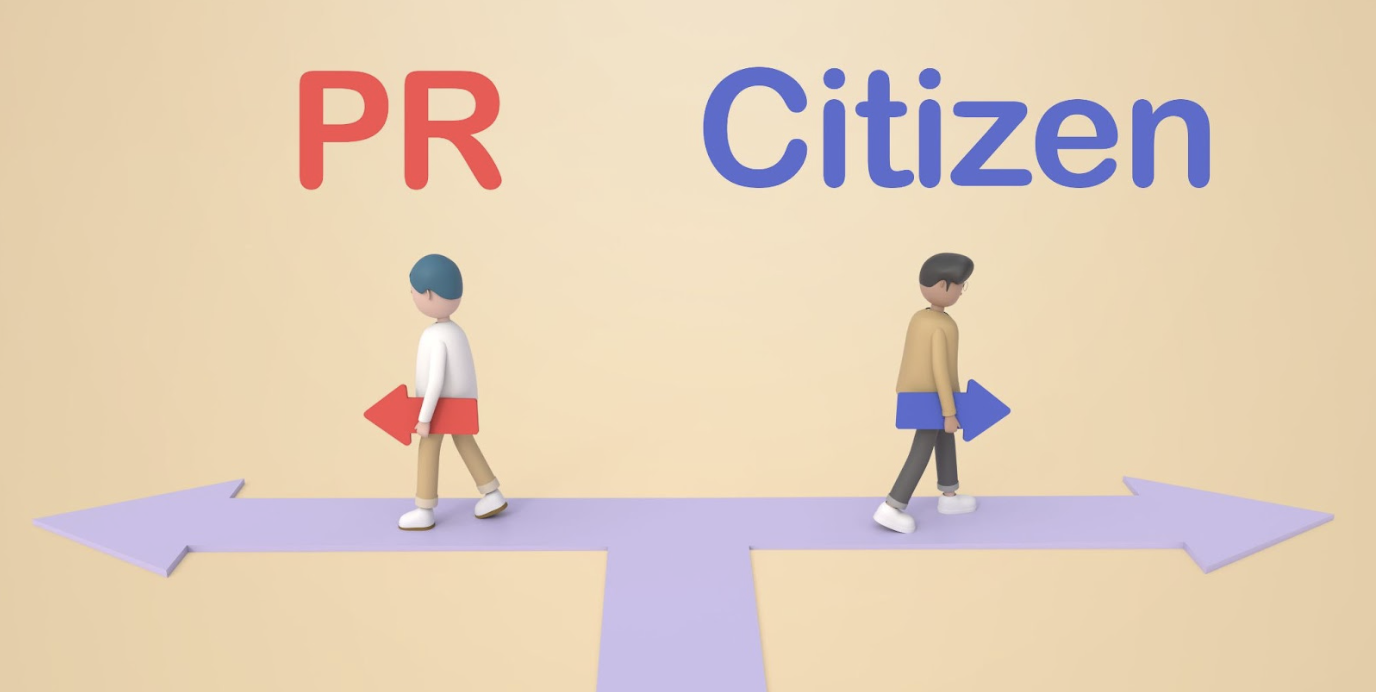
Choosing between being a Singapore Permanent Resident (PR) and a Singapore Citizen is one of the most significant decisions an individual can make. While both statuses allow you to live, work, and integrate into Singaporean society, the distinction is substantial.
In essence, Permanent Residency is a long-term visa that grants you most of the residential benefits of a local, but it comes with limitations and obligations. In contrast, Singapore Citizenship is the ultimate commitment, affording you the complete set of political, social, and economic rights, privileges, and responsibilities that come with being a national of the country.
Key differences lie in your right to vote, the passport you hold, eligibility for public housing and subsidies, and the mandatory National Service obligation. For many, the journey to citizenship begins with securing PR status, making it a crucial stepping stone.
Here’s a quick overview of the core distinctions:
| Feature | Singapore Permanent Resident (PR) | Singapore Citizen |
| Passport & Travel | Hold foreign passport; requires Re-Entry Permit (REP) | Singapore passport; check destination entry requirements |
| Voting Rights | Not eligible to vote or run for office | Eligible to vote in parliamentary elections |
| Public Housing (HDB) | Can only buy resale flats (after 3 years); limited grants | Can buy new BTO flats & resale flats; access to full grants |
| National Service (NS) | Compulsory for second-generation male PRs | Compulsory for all able-bodied males |
| Healthcare Subsidies | Subsidised, but at a lower rate than citizens | Highest level of government subsidies |
| Education Subsidies | Subsidised, but pay higher school fees than citizens | Highest level of subsidies and lowest school fees |
| Property Stamp Duty | 5% ABSD on first residential property | 0% ABSD on first residential property |
| Family Sponsorship | Can sponsor spouse and unmarried children under 21 | Can sponsor spouse, children, and parents for PR/LTVP |
The most fundamental differences between a PR and a citizen are rooted in political and civic rights, which define one’s national identity and allegiance.
This is a privilege reserved exclusively for Singapore Citizens. As a citizen, you have a direct say in shaping the nation’s future through parliamentary and presidential elections. You also have the right to run for public office and hold a position in Singapore’s government. PRs, as foreign nationals, do not have these rights.
A Singaporean citizen is entitled to hold the iconic red Singapore passport. Check current entry and visa requirements for each destination before travelling.
A PR retains a foreign passport and should keep a valid Re-Entry Permit for overseas travel. For a PR overseas without a valid REP, current rules include a 180-day application period; missing that deadline or receiving a rejection can result in loss of PR status. Check ICA’s rules for your circumstances.
National Service is a cornerstone of Singapore’s defence and a shared experience for its male citizens. This obligation also extends to certain PRs.
Failing to comply with NS obligations has severe consequences and will adversely affect any future applications to renew a Re-Entry Permit or apply for Singapore Citizenship.

Housing policy is one of the most significant areas where citizens have a distinct advantage, particularly concerning subsidised public housing managed by the Housing & Development Board (HDB).
Singapore Citizens have access to a wide array of CPF Housing Grants (e.g., Enhanced CPF Housing Grant, Family Grant) that can significantly reduce the cost of an HDB flat. These grants are generally not available to PR households. A Singapore Citizen/PR household will receive a smaller grant amount compared to a Citizen/Citizen household.
When purchasing private residential property, the Additional Buyer’s Stamp Duty (ABSD) rates are drastically different:
| Buyer Profile | ABSD Rate on First Property | ABSD Rate on Second Property |
| Singapore Citizen | 0% | 20% |
| Permanent Resident | 5% | 30% |
This 5% difference on a first property purchase can translate to a substantial additional cost for PRs.
The government provides significant subsidies to its citizens to keep healthcare and education affordable. While PRs also benefit, the level of financial support is lower.
From polyclinic visits to hospital stays, citizens receive the highest level of subsidies. This extends to national healthcare insurance schemes like MediShield Life, where PRs pay higher premiums for the same coverage. For instance, in public hospitals, subsidies for citizens can be up to 80%, while for PRs, the percentage is significantly lower.
Compare fees for your child’s actual school and citizenship status using MOE’s school-fee checker. School fees and miscellaneous fees are separate components; a S$0 school fee does not mean there are no monthly charges.
For example, the checker’s 2026 result for Admiralty Primary School shows S$330 in school fees plus S$13 in miscellaneous fees for a PR child, compared with S$0 plus S$13 for a citizen child. Check secondary, pre-university and independent-school fees separately. International-student rates also distinguish ASEAN and non-ASEAN students. For a future school year, use the published fees for that year.
While PRs and citizens work side-by-side, there are subtle but important differences in employment and financial planning.
Under the Ministry of Manpower’s Fair Consideration Framework, companies are required to give fair consideration to all candidates. However, there can be an implicit preference for hiring citizens, particularly in sectors subject to a foreign worker quota.
Citizens and PRs from their third year onwards use the same CPF contribution table, with rates depending on age and wages. First- and second-year PRs normally use graduated employer and employee rates, unless an approved higher-rate arrangement applies. Citizenship does not automatically increase CPF deductions for someone already paying full rates. See our CPF and housing-grant planning guide and CPF calculator.
A Singapore Citizen has a distinct advantage when it comes to securing a future for their family in Singapore. Citizens can sponsor a wider range of family members for PR or a Long-Term Visit Pass (LTVP), including their parents. A PR, on the other hand, can generally only sponsor their spouse and unmarried children below the age of 21.
For many Permanent Residents, the ultimate goal is the journey from pr to citizen singapore, a final step that involves applying for citizenship. Generally, an individual is eligible to apply if they are at least 21 years old and have been a Permanent resident for at least 2 years. The application is assessed on a range of factors, including economic contributions, social integration, and long-term commitment to Singapore.
It is crucial to understand that Singapore does not permit dual citizenship for adults. Upon successfully applying for Singapore Citizenship, you will be required to renounce your original citizenship. This is a profound decision that signifies a complete transfer of allegiance to Singapore.
The decision to move from PR to citizen status is deeply personal. It involves weighing the tangible benefits of lower costs, greater housing access, and a powerful passport against the irrevocable act of renouncing your birth citizenship.
Permanent Residency offers a stable and secure way to live and work in Singapore for the long term. However, citizenship offers a deeper sense of belonging, ownership, and a full stake in the nation’s future.
Navigating the complexities of Singapore’s immigration policies can be challenging. Whether you are preparing your Singapore permanent resident application or taking the final step to citizenship, our expert team can provide personalized guidance tailored to your unique profile.
Contact us today for a confidential consultation to discuss your specific situation and how we can help you achieve your goals in Singapore.

Please share with us some details about your needs, we will get back to you.


"*" indicates required fields
 计算您的新加坡PR成功机会