Singapore Company Incorporation Services for Foreigners
Work with one licensed firm to register your company, secure your work pass and plan your path to Singapore permanent residence (PR), 100% remotely.
While most providers stop at company registration, The Immigration People (TIP) manages your incorporation and your immigration matters together, so that your company structure supports your Employment Pass (EP) application rather than working against it.
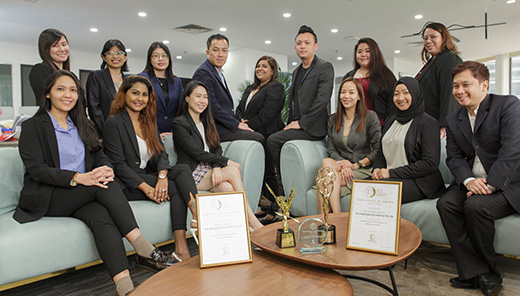
 Aspiring Woman Enterpreneurs 2022/2023


 4.9★ on Google Reviews


Can a foreigner register a company in Singapore?
Yes. A foreigner can start a business in Singapore and own 100% of the shares in a Singapore private limited company. There is no requirement to have a local shareholder or local business partner, or to reside in Singapore.
To incorporate it, you must engage a registered Corporate Service Provider (CSP) to submit the application through ACRA's Bizfile portal. Every company must also appoint at least one Singapore-based resident director. For a standard application, ACRA typically approves the incorporation on the same day.
Proven Track Record in Singapore Company Registration
Singapore is consistently ranked as one of the easiest countries for foreign entrepreneurs to set up a company, with attractive tax incentives and 100% foreign ownership.













Why incorporate in Singapore?
Singapore offers tax benefits, a base for accessing Southeast Asian markets, and full foreign ownership without the need for a local partner.

Tax Benefits
Singapore operates a territorial tax system, with the corporate income tax rate capped at 17%. Qualifying new companies also receive partial tax exemptions for their first 3 Years of Assessment (tax years).
Source: IRAS

Global Access
A Singapore company gives you a credible base from which to access Southeast Asian markets, and Singapore has Avoidance of Double Taxation Agreements (DTAs) with more than 90 jurisdictions.
Source: IRAS

Ownership & Control
Unlike many jurisdictions in the region, Singapore permits full foreign ownership without requiring a local partner.
Source: ACRA
Can I register a Singapore company if I do not live there?
Yes. You do not need to live in Singapore or visit the country to have your company incorporated, as the application is filed by a registered corporate service provider. Your company will need at least one director who is ordinarily resident in Singapore. If you plan to relocate and work in the business, you will also need an appropriate work pass.
| Requirement | If you live in Singapore | If you live overseas |
|---|---|---|
| Company ownership | Up to 100% | Up to 100% |
| Resident director | You have the right to work for the company if you are
| Appoint a nominee director as your resident director while you apply for your own Employment Pass, so that you can take on the role yourself once it is approved |
| Who files the application | A registered corporate service provider on behalf of a foreign founder | A registered corporate service provider |
| Company secretary | Appoint within 6 months | Appoint within 6 months |
| Registered office | A physical Singapore address is required (included in all our packages) | A physical Singapore address is required (included in all our packages) |
| Paid-up capital | From $1 | From $1, although a higher amount is usually advisable for an Employment Pass application |
| Right to work in the company | You have the right to work for the company if you are
| You can work overseas, remotely for your Singapore entity without a work pass. If you wish to work for the Singapore entity in Singapore, a valid Work Pass such as an Employment Pass (EP) will be required. |
Incorporating remotely does not mean your company will avoid scrutiny. Banks, the Ministry of Manpower (MOM) and the Immigration & Checkpoints Authority (ICA) will later assess why the business was set up and whether it carries on genuine business activity or exists only on paper. We coordinate your incorporation timeline with your relocation and work pass planning, so that your business can clearly demonstrate that activity when it is assessed.
Which business structure should I choose in Singapore?
For many foreign founders, a private limited company (Pte Ltd) is a practical choice. It allows 100% foreign ownership, provides limited liability for shareholders and can employ staff. If you intend to work in Singapore, your eligibility for an Employment Pass must be assessed separately.
Other structures suit more specific situations: a limited liability partnership (LLP) for professional partnerships, a representative office for exploring the market without trading, and a branch office for an existing foreign parent company. Unlike a Pte Ltd, a sole proprietorship offers no limited liability protection and does not support a work pass application.
We assess which structure would best support your intended role in Singapore, your work pass eligibility and your long-term PR plans, whether that is a standalone Pte Ltd, a subsidiary or a holding structure.
Source: ACRA on business structures
Do I need a nominee director in Singapore?
You need a nominee director only if your company has no director who is ordinarily resident in Singapore. Every Singapore company must have at least one director who is a Singapore citizen, a permanent resident or an Employment Pass holder. A nominee director is an individual who is ordinarily resident in Singapore and is appointed to meet this requirement.
Nominee director fees in Singapore range from S$3,000 to S$15,000 per year, depending on the service provider. These fees reflect the full legal and statutory liability that the nominee takes on for your company, even though they are not involved in its day-to-day operations.
| Appoint a nominee director now | |
|---|---|
| When you can legally start working in the company | Once your Employment Pass (EP) or other valid work passes such as Overseas Networks & Expertise (ONE) Pass or EntrePass has been issued. |
| Annual cost | S$3,000–S$15,000, including a refundable security deposit |
| Nominee appointment ends when | Your own Employment Pass is approved |
Source: ACRA — resident-director requirement, Companies Act
We provide nominee director services to help you meet the statutory requirement, and our Business Elite package includes this service for 12 months. We also advise on the best approach for your situation: appointing a nominee director for an interim period, applying for your own Employment Pass first, or restructuring your shareholding and directorships to support your future Employment Pass or PR plans. We look beyond legal compliance to make sure that your immigration status remains sustainable over the long term.
Can a foreigner work in their own Singapore company?
A foreigner can work in their own Singapore company only if they hold a valid work pass. Owning shares, even 100% of them, does not give a shareholder the right to work in the company. Any director or shareholder who is not a Singapore citizen or permanent resident must obtain a valid work pass before engaging in any employment-related activities in Singapore.
For most founders, the appropriate work pass is an Employment Pass sponsored by the company they have just incorporated. As of September 2026, the minimum qualifying salary is S$5,600 per month for most sectors and S$6,200 per month for financial services, and it rises with the applicant’s age. The application must also pass MOM’s Complementarity Assessment Framework (COMPASS), a points-based system that assesses salary, qualifications, workforce diversity and the employer’s support for local employment.
As a foreigner, working without a valid work pass is an offence. The offence remains on record with the Ministry of Manpower (MOM) and will count against any other future work or immigration applications in Singapore.
We make sure that your job scope, job title, salary and business plan are consistent with one another before your Employment Pass application is submitted, so that you do not inadvertently damage your immigration record.
Source: Ministry of Manpower
Two ways to start a business in Singapore
Business Owners / Entrepreneurs
Singapore offers a range of business structures, and whether you are starting on your own or with partners, we will help you choose one that supports both your business today and your long-term immigration goals.
Who Is This For?
Foreign business owners, entrepreneurs and professionals who wish to start a business in Singapore.
Step 1: Identify the right business structure
- Private limited company (Pte Ltd): the most common structure.
- Limited liability partnership (LLP): a hybrid structure that combines the operational flexibility of a partnership with limited liability protection similar to that of a company. It is typically used by professionals working in the same field.
- Limited partnership: a structure with at least one general partner who has unlimited liability and one or more limited partners whose liability is limited to the amount they invest.
- Sole proprietorship: a business owned by one individual. The owner and the business are legally the same entity, so the owner has unlimited personal liability.
- Company limited by guarantee: a structure typically used by non-profit organisations, such as charities and associations.
- Representative office: an option for foreign companies that want to explore the Singapore market and assess business viability before committing to full incorporation.
- Branch office (foreign branch): an extension of the foreign parent company that allows it to conduct business in Singapore. Because the parent company remains fully liable for the branch’s obligations and actions, this structure should be considered carefully.
Each structure has its own advantages and disadvantages, and the right choice depends on your business objectives, risk appetite and personal preferences. Our experienced company formation team can help you weigh the options, especially if you are also planning for a work pass, PR or a long-term relocation.
Step 2: Prepare for incorporation
We will guide you through:
- Selecting and reserving your company name
- Appointing your directors and confirming your shareholders
- Preparing your company constitution
- Appointing your company secretary
- Securing a registered office address
- Deciding on your share capital structure
- Collecting the required consent-to-act and non-disqualification declarations
We manage the set-up process for you from start to finish.
Work pass options
The work pass options on this path are the Employment Pass, the Entrepreneur Pass (EntrePass) and the Overseas Networks & Expertise Pass (ONE Pass).
Why choose this path?
This is the most direct route for a foreigner to set up a company in Singapore and is commonly used for stable businesses with active operations.
Investor & High Net Worth Individuals
Who is this for?
High-net-worth individuals (HNWIs) and families who wish to set up a single family office (SFO) to move their investments and assets to Singapore for wealth preservation, diversification, tax certainty, succession planning and philanthropy. The minimum requirement is S$20 million in assets under management (AUM).
Step 1 : Identify your family’s needs
Every SFO is unique and built around the family’s interests and needs. At this stage, it is not yet possible to apply for a work pass.
Step 2 : Incorporate your SFO entity
- Incorporate the fund management company and the fund entity
- Identify your SFO structure
- Identify your investment strategy
Step 3 : Build your team
- Set up a board and executive committee
- Hire key management and investment professionals for both the SFO entity and the fund entity (you can take on one of these roles yourself)
- Hire a Singapore-based fund administrator
Step 4 : Apply for tax incentives
- Apply under the Section 13O or Section 13U tax incentive scheme
Applicants can expect a decision from the Monetary Authority of Singapore (MAS) within 3 months.
Five steps to opening your company in Singapore

Strategic Assessment
We Analyse & Plan
- Initial profiling of your background, objectives, and business plans.
- Assessment of shareholding structure and corporate setup.
- Advice on the Singapore laws, regulations and policies that apply to foreign business owners.
- Strategic advice on immigration pathways and work pass planning, aligned with your business objectives.

Company Incorporation
We register your company
- We handle the complete company registration process in Singapore for you, including ACRA filing and name reservation.
- We provide nominee director services where applicable.

Corporate Bank Account Opening
We help you open your corporate account
- We help you open corporate bank accounts (digital and traditional, subject to approval) in Singapore remotely. Our team advises on suitable banks, prepares and reviews the required documents, submits the application and liaises with the bank throughout the compliance and verification process.
- In most cases, no branch visit is required, so the process is simple, secure and efficient for both local and foreign-owned businesses.

Work pass application
We secure your work pass
- We review and prepare all the documents required for your work pass applications to MOM.
- We submit your application to MOM and continue to support you while it is being assessed and after the outcome is known, including attending meetings with MOM officers or assisting with an appeal where required.
- Once you receive In-Principle Approval (IPA), we advise you on the next steps for your move to Singapore, including your medical examination, your MOM appointment and the issuance and collection of your work pass card.
- We also advise you on keeping your work pass valid and send you renewal reminders.

Arrival and integration
You start your business
- Support with preparing for your relocation and setting up your operations when you arrive.
- Guidance on compliance milestones and post-arrival obligations.
- Ongoing advice to keep your business and immigration matters running smoothly.
- Complimentary consultation on your children’s education and school search.
- Complimentary Singapore PR consultation.
- Networking opportunities with local business owners to help you launch your business in Singapore.
- Introductions to reliable, accredited local partners and agents for legal matters, property searches, insurance, savings and investments.
Incorporation packages and pricing
Choose the level of support you need from one licensed firm, with transparent pricing and no hidden fees.
- Consultation with our CSIS and ICSA registered Corporate Secretary Executive
- Company Name Reservation
- Company Incorporation
- Corporate Secretarial Kit
- Corporate Secretarial Services for 12 months
- Registered Office Address in Singapore's Central Business District (CBD) including mails scanning and forwarding via email
- Corppass account setting up
- Everything in Business Essential Package, including:
- Digital Bank Account Opening Service
- Everything in Business Advanced Package, including:
- Nominee Director Service for 12 months
- Up to two (2) Employment Pass (EP) applications for founders and key executives
- Dependant’s Pass applications for all dependants of each Employment Pass holder
- Up to 2 education verification checks per Employment Pass holder
- Application(s) for Immunisation Vaccination Requirements for children under 12 years old with Health Promotion Board (HPB)
- Complimentary Consultation and advisory on Singapore Immigration from work passes to Permanent Residence (PR) and education consulting for children.
Can a foreigner open a Singapore corporate bank account remotely?
Yes. In most cases, you can open a corporate bank account without visiting a branch. Bank approval is usually the slowest step in setting up a foreign-owned company. It can take 1 to 8 weeks, compared with 1 to 3 working days for the incorporation itself.
Banks carry out their own compliance checks in addition to ACRA’s requirements. These typically cover who controls the company, the source of funds and whether the company has genuine business activity in Singapore. Digital banks and digital payment service providers usually approve applications faster, while traditional banks tend to offer a wider range of facilities.
Our Business Advanced and Business Elite Packages include assistance with a corporate account application. The bank makes the final decision on account opening.
What should I do after my Singapore company is incorporated?
Open a corporate bank account
A corporate account keeps business and personal transactions separate and makes tax filing simpler.
Apply for Corppass
Corppass is the single login for your company’s online transactions with Singapore government agencies. You must be the appointed Corppass Admin for your company or organisation, or a Registered Officer (such as a director, owner, or secretary), so if you use our nominee director service, we handle the registration for you. If you do not, we liaise with your company’s director to set it up.
Set up and maintain company registers
These include the register of registrable controllers, the registers of nominee directors and nominee shareholders, the electronic register of members, the register of directors and, where applicable, the registers of secretaries, CEOs and auditors.
Check whether you need licences or permits
Use the GoBusiness Licence e-Adviser to find out whether your business activity needs a licence or permit. If it does not, you can start operating immediately.
Appoint a company secretary and an auditor
Every company needs a company secretary. An auditor is also required unless the company is exempt from audit.
Download your free Business Profile
The Business Profile sets out your company's registered details. The free copy is available for 60 days after incorporation and then expires.
Which post-incorporation steps do TIP's packages cover?
- Business Essential: Corporate secretarial services, including a named company secretary and the upkeep of your company registers, plus a registered office address, all for the first 12 months. This means your obligation to appoint a company secretary is covered from day one.
- Business Advanced and Business Elite: Everything in Business Essential, with additional corporate bank account opening service.
- Business Elite: Everything in Business Elite, with 12 months Nominee Director (ND) service and CorpPass registration
- Not included: Business licence or permit applications (we can check for you as we work with credible partners to assist with your licence or permit applications if it is required to operate your business activity)
Five mistakes we see foreign founders make
- Incorporating before planning the work pass.
Registering the company is the easy part, but founders who incorporate first and ask about the Employment Pass later often find that their shareholding or job title works against their application.
- Treating the nominee director as permanent.
Appointing a nominee director should be an interim arrangement, not a permanent one, and keeping a nominee in place indefinitely can raise questions later.
- Setting paid-up capital at the statutory minimum, then applying for an Employment Pass.
A paid-up capital of $1 satisfies ACRA. However, for newly founded companies with no revenue track record, paid-up capital is critical. It is the primary financial metric the Ministry of Manpower (MOM) uses to assess your company’s stability. Our consultants will analyse the nature of your business and your target Employment Pass (EP) salary to recommend the optimal capital structure for your application.
- Assuming remote incorporation means no scrutiny.
Plan from the outset how your company will demonstrate genuine business activity, because banks, MOM and ICA will look beyond its registration when they review it.
- Choosing a provider on filing price alone, then paying an immigration firm to restructure the company.
The cheapest incorporation is rarely the cheapest outcome.
Why Choose The Immigration People For Your Business Set-Up?

We don't just register companies; we provide strategic work pass planning to support successful applications.
We specialise in supporting foreign entrepreneurs who want to incorporate, relocate and operate a business in Singapore legally, efficiently and compliantly — all under one roof. Our consultants guide you from entity structuring and company registration through post-incorporation compliance, corporate banking support, securing your work visas and long-term visas for your family members, and permanent residency (PR) pathways.
Reviewed by Elena Kwa — MOM-Licensed Immigration Consultant, EA Personnel Registration No. R23118902
Incorporate your Singapore company with confidence.
Worried about rejection? We have a 98% success rate for pre-qualified applicants.
Expert Insights for Foreign Entrepreneurs
Navigating Singapore’s business landscape with confidence.

Frequently asked questions about incorporating a Singapore company
How long does company incorporation take in Singapore, and what causes delays?
Most incorporations are completed within 1 to 3 working days, and ACRA usually approves a registration soon after payment is made. Complex applications can take up to 15 working days. If your business activity needs extra approval from a referral authority, such as the Board of Architects or the Monetary Authority of Singapore (MAS), registration can take 14 to 60 days. Other common causes of delay are a proposed company name that triggers an additional review, and shareholders or directors from higher-risk jurisdictions. We pre-screen for all of these before filing.
What is the minimum paid-up capital for a Singapore company?
The statutory minimum is $1, and that is all ACRA requires for incorporation. However, $1 is not an appropriate figure if you intend to apply for an Employment Pass through the company, because MOM assesses whether the business is adequately funded for its planned activities.
What documents does a foreigner need to register a Singapore company?
Each foreign individual needs to provide six items: a copy of their passport bio page, proof of their overseas residential address dated within the last 3 months, a signed consent to act as director, a declaration of non-disqualification, a contact email address and mobile number, and completed know-your-customer (KYC) and source-of-funds declarations. Corporate shareholders must also provide a certificate of incorporation, a register of directors and a register of members.
Does my Singapore company need to be audited?
Most new companies do not require an audit. A company qualifies for audit exemption as a "small company" if it meets at least two of three thresholds: annual revenue of S$10 million or less, total assets of S$10 million or less, and 50 or fewer employees. Foreign-founded start-ups usually qualify from day one and remain exempt for years. However, companies that are exempt from audit must still maintain proper accounting records and prepare financial statements in accordance with Singapore requirements.
Source: ACRA
How do I close a Singapore company?
There are two ways to close a Singapore company: striking off and winding up. Striking off is the simpler and cheaper option. It is available to companies that have ceased business, have no outstanding assets or liabilities, and meet ACRA’s striking-off criteria. The process typically takes 4 to 6 months. Winding up applies where there are assets or debts to settle, and it requires a liquidator. In either case, the company must be up to date with its filings, which is one reason to keep your corporate secretarial work in order from the start.
Source: ACRA
Can a foreigner be a director of a Singapore company?
Yes. There is no restriction on foreigners holding directorships, and you can be a director of your own company from day one. However, you cannot meet the resident-director requirement yourself unless you are a Singapore citizen, a permanent resident or an Employment Pass holder. Foreign founders therefore often serve as directors alongside a locally resident nominee director or, where eligible, become the resident director themselves once they obtain an appropriate work pass. Being a director does not, by itself, give you the right to work in the company.
How do I check if my company name is available in Singapore?
Name availability is checked on ACRA’s Bizfile portal when the application is filed, and we run this check for you before you commit to your branding. A name will be rejected if it is identical to an existing name, is considered undesirable or contains a word that requires approval from another authority. Words such as “bank”, “school” or “media” trigger a referral to the relevant authority, which can add several weeks to the process. An approved name is reserved for 120 days.
Source: ACRA
Who can be a company secretary in Singapore?
The company secretary must be an individual (not a company) who is ordinarily resident in Singapore and who is not the company’s sole director. No formal qualification is required for this role in a private company. The appointment must be made within 6 months of incorporation. Our packages include a named company secretary for the first 12 months.
Source: ACRA
Ready to start your Singapore chapter?
Skip the general queue and automated bots. Tell us about your business goals, and a senior consultant will manually review your profile to determine the best incorporation and visa strategy for you.
Strictly confidential · Response within 2 hours (business days)

Please share with us some details about your needs, we will get back to you.