Resources
Your Ultimate Resource Hub for Singapore Immigration
Browse through our library of informative resources to stay informed and inspired

Browse through our library of informative resources to stay informed and inspired

Singapore Citizenship offers unparalleled advantages, including 0% Additional Buyer’s Stamp Duty (ABSD) on your first home, exclusive healthcare subsidies, and access to government cash grants. It provides a level of financial security and lifestyle benefits that Permanent Residency (PR) cannot fully match.
In 2024, Singapore granted 22,766 new citizenships and 35,264 PRs [1], These figures represent the highest number of PR approvals since 2010. However, this does not indicate an open-door approach. Singapore’s immigration model remains selective, precise, and long-term focused. The government prioritises applicants who live, work, and build their lives here in Singapore.
If you are a PR considering the final step, understanding the tangible perks of being a Singapore Citizen is essential. You must weigh these benefits against what you give up when renouncing your original citizenship. This guide outlines the top eight benefits of securing Singapore’s coveted red passport.
Housing in Singapore is expensive. The government uses the Additional Buyer’s Stamp Duty (ABSD) to manage property demand. As a Singapore Citizen, you enjoy the lowest possible tax rates.
You pay 0% ABSD on your first residential property. You only pay the basic Buyer’s Stamp Duty (BSD). In contrast, a Singapore PR must pay a 5% ABSD on their first home. Foreigners face a staggering 60% ABSD [2].
| Buyer Profile | ABSD on 1st Property | ABSD on 2nd Property |
|---|---|---|
| Singapore Citizen | 0% | 20% |
| Singapore PR | 5% | 30% |
| Foreigner | 60% | 60% |
This 5% difference on a S$1 million property saves a citizen S$50,000 compared to a PR. This is a significant financial advantage when building your wealth in Singapore.
Eligible citizen households can apply for new HDB flats and housing grants. A PR can be included in a qualifying SC/PR family application; a household consisting only of PRs cannot buy a BTO flat. For eligible PR-only resale households, all applicants and core occupiers must have held PR status for at least three years. Flat type, family nucleus, income and other conditions apply. Check HDB’s household eligibility rules before planning a purchase.
Singapore’s healthcare system is globally recognised for its quality and efficiency. While schemes like MediShield Life provide all residents with basic protection for large hospital bills, subsidy levels are much lower for PRs.
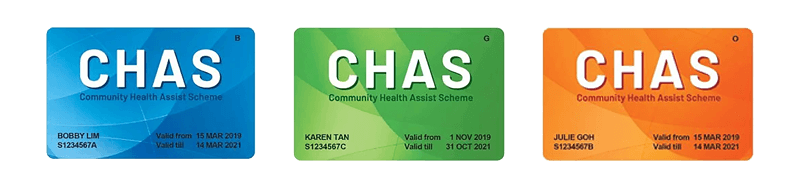
The Community Health Assist Scheme (CHAS) remains strictly for Singapore Citizens. The CHAS card allows citizens to receive subsidised medical and dental care at participating general practitioner (GP) clinics. PRs and foreigners are not eligible for CHAS.
In public hospitals, Singapore Citizens receive the highest tier of subsidies. For example, a citizen in a Class C ward receives a significantly larger hospitalisation subsidy than a PR with the same income level.
Citizens can apply for a Singapore passport and do not need a PR Re-Entry Permit. Travel access depends on destination rules and can change.
For PRs overseas without a valid REP, the rules effective from 1 December 2025 include a 180-day application period. Failure to apply within the applicable period, or rejection of the application, can result in loss of PR status. This is not an unconditional grace period or an assurance of approval. See ICA’s REP conditions.
Use MOE’s fee checker for your child’s school and status. Our checked 2026 primary-school example is S$330 in school fees for a PR versus S$0 for a citizen, with S$13 miscellaneous fees for each. Other school levels and types have different charges.
Citizen students also have Edusave accounts with annual government contributions for approved education expenses.
Benefits depend on your child’s citizenship and the conditions of each scheme. The announced SG Child Support Package will replace Baby Bonus and Large Families support; existing payouts continue during the transition. Check the official announcement and our newborn citizenship and support guide before budgeting.
Citizen households and eligible individuals may qualify for government support, with conditions varying by scheme. CDC vouchers are a household benefit, not a separate award to every citizen. The January 2026 CDC tranche was S$300; its linked S$500 tranche was issued in May 2025. Check each tranche’s eligibility and expiry instead of treating it as a permanent annual amount.
CPF is shared by citizens and PRs. Citizenship does not itself increase contributions for PRs already paying full rates. Read our CPF and grants guide for a worked example.
Eligible cash top-ups can qualify for up to S$8,000 of relief for yourself and S$8,000 for family members, subject to account, recipient and overall tax-relief limits. This is also available to qualifying PRs. Top-ups attracting MRSS matching grants do not qualify for this relief from YA 2026; the corresponding MMSS exclusion applies from YA 2027. See IRAS’s CPF Cash Top-up Relief conditions.
Navigate the process with confidence. Read ourSuccess Stories to see how we’ve helped others, then book your complimentary one-on-one consultation with our immigration experts to get a personalised assessment of your profile.Contact us today.
For the general adult PR route, ICA requires applicants to be at least 21 and to have held PR status for at least two years. Other categories have different criteria. Eligibility does not guarantee approval; follow ICA’s published requirements rather than assuming an extra waiting period is mandatory.
No. Singapore strictly forbids dual citizenship for adults. You must renounce your foreign citizenship and surrender your foreign passport before you can officially become a Singapore Citizen.
If you choose to renounce your Singapore Citizenship and leave the country permanently, you are allowed to withdraw your CPF savings in full, subject to CPF Board regulations.

References
[1] National Population and Talent Division. (2024). Population in Brief 2024. Retrieved from https://www.population.gov.sg
[2] Inland Revenue Authority of Singapore. (2026). Additional Buyer’s Stamp Duty (ABSD). Retrieved from https://www.iras.gov.sg
Additional sources are linked beside the updated claims above.

Please share with us some details about your needs, we will get back to you.


"*" indicates required fields
 计算您的新加坡PR成功机会