Resources
Your Ultimate Resource Hub for Singapore Immigration
Browse through our library of informative resources to stay informed and inspired

Browse through our library of informative resources to stay informed and inspired

Singapore Citizenship offers unparalleled advantages, including 0% Additional Buyer’s Stamp Duty (ABSD) on your first home, exclusive healthcare subsidies, and access to government cash grants. It provides a level of financial security and lifestyle benefits that Permanent Residency (PR) cannot fully match.
In 2024, Singapore granted 22,766 new citizenships and 35,264 PRs [1], These figures represent the highest number of PR approvals since 2010. However, this does not indicate an open-door approach. Singapore’s immigration model remains selective, precise, and long-term focused. The government prioritises applicants who live, work, and build their lives here in Singapore.
If you are a PR considering the final step, understanding the tangible perks of being a Singapore Citizen is essential. You must weigh these benefits against what you give up when renouncing your original citizenship. This guide outlines the top eight benefits of securing Singapore’s coveted red passport.
Housing in Singapore is expensive. The government uses the Additional Buyer’s Stamp Duty (ABSD) to manage property demand. As a Singapore Citizen, you enjoy the lowest possible tax rates.
You pay 0% ABSD on your first residential property. You only pay the basic Buyer’s Stamp Duty (BSD). In contrast, a Singapore PR must pay a 5% ABSD on their first home. Foreigners face a staggering 60% ABSD [2].
| Buyer Profile | ABSD on 1st Property | ABSD on 2nd Property |
|---|---|---|
| Singapore Citizen | 0% | 20% |
| Singapore PR | 5% | 30% |
| Foreigner | 60% | 60% |
This 5% difference on a S$1 million property saves a citizen S$50,000 compared to a PR. This is a significant financial advantage when building your wealth in Singapore.
Singapore Citizens have exclusive rights to purchase new Build-To-Order (BTO) flats directly from the Housing & Development Board (HDB). These flats are heavily subsidised and priced significantly below market value.
PRs cannot buy BTO flats. They are restricted to the resale market. They may only buy resale HDB flats under a valid family nucleus scheme. If there is no Singapore Citizen in the household, all PR buyers and essential occupiers must have held PR status for at least three years.
Citizens also enjoy the flexibility to rent out their entire HDB flat after fulfilling the Minimum Occupation Period (MOP). A Singapore PR is not allowed to do this under any circumstances unless there is at least one Singapore Citizen owner.
Singapore’s healthcare system is globally recognised for its quality and efficiency. While schemes like MediShield Life provide all residents with basic protection for large hospital bills, subsidy levels are much lower for PRs.
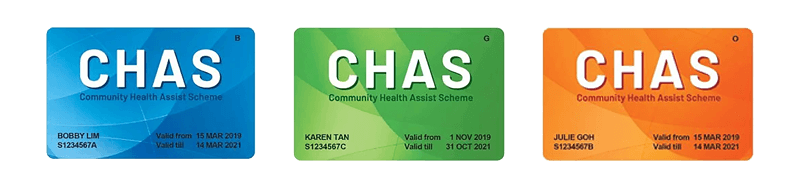
The Community Health Assist Scheme (CHAS) remains strictly for Singapore Citizens. The CHAS card allows citizens to receive subsidised medical and dental care at participating general practitioner (GP) clinics. PRs and foreigners are not eligible for CHAS.
In public hospitals, Singapore Citizens receive the highest tier of subsidies. For example, a citizen in a Class C ward receives a significantly larger hospitalisation subsidy than a PR with the same income level.
The Singapore passport is consistently ranked as the most powerful in the world. In 2026, it retained its number one spot on the Henley Passport Index [3].
As a Singapore Citizen, you enjoy visa-free or visa-on-arrival access to 192 destinations globally. This eliminates the lengthy form-filling and visa application fees required for many other nationalities.
More importantly, you no longer need to worry about renewing a Re-Entry Permit (REP). From 1 December 2025, the ICA implemented stricter REP enforcement. If a PR remains outside Singapore without a valid REP, their PR is automatically revoked. Citizenship removes this anxiety entirely.
The Ministry of Education (MOE) applies tiered school fees based on residency status. Singaporean children benefit from heavily subsidised, almost free, public education.
Without subsidies, education fees can be a substantial financial burden.
| School Level | Singapore Citizen | Singapore PR | International (Non-ASEAN) |
|---|---|---|---|
| Primary School | Free (S$0) | S$305 / month | S$985 / month |
| Secondary School | S$5 / month | S$480 / month | S$1,650 / month |
| Junior College | S$6 / month | S$560 / month | S$2,000 / month |
Note: Fees shown are monthly school fees for 2026 [4]. Miscellaneous fees apply to all students.
Furthermore, only Singapore Citizen students have an Edusave account automatically created for them. The government makes annual contributions to this account to help offset enrichment programmes and miscellaneous fees.
Raising a child in Singapore is expensive. The government actively encourages Singaporean couples to start a family through the Baby Bonus Scheme.
For children born today, parents receive a Baby Bonus Cash Gift (BBCG) of S$11,000 for their first and second child, increasing to S$13,000 for the third and subsequent children [5].
Additionally, every Singaporean child receives a S$5,000 Child Development Account (CDA) First Step Grant. The government also provides dollar-for-dollar matching for parental savings in the CDA, up to S$4,000 for the first child. This means a first-time citizen parent can receive up to S$20,000 in total government support for their newborn.
Singapore Citizens regularly receive direct financial support from the government to help with the cost of living. These perks are not available to PRs or foreigners. These benefits are categorized into immediate consumption (vouchers) and targeted cash grants.
In 2026, every Singaporean household receives S$800 in CDC Vouchers (S$300 in January and S$500 in June) [6]. These vouchers can be spent at participating heartland merchants, hawkers and supermarkets.
Singapore Citizens also receive various forms of government support, including LifeSG cash grants, GST Vouchers, and U-Save rebates to offset utility bills. In their later years, senior citizens may have access to more government support schemes, such as the Silver Support Scheme.
Fact Check: Unlike CPF (which PRs also contribute to), these cash payouts are non-contributory—they are direct transfers from the government budget to the citizen’s pocket.
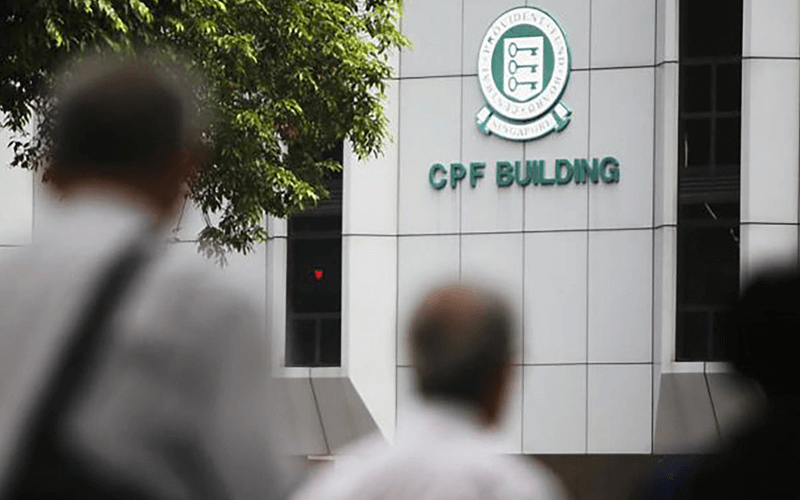
The Central Provident Fund (CPF) is a mandatory, government-backed social security savings scheme. Contrary to common misconceptions, CPF is a tax-sheltered asset, not a tax. It provides guaranteed interest and serves as a pillar of financial planning in Singapore.
The transition from PR to Citizen status significantly impacts your take-home pay and employer contributions:
Singapore Citizens and PRs can leverage CPF for significant tax savings through the Retirement Sum Topping-Up (RSTU) scheme:
| Relief Category | Max Annual Relief | Target Account |
| Self Top-up | S$8,000 | Special Account (SA) / Retirement Account (RA) |
| Loved Ones Top-up | S$8,000 | Parents, Spouse, Siblings, etc. |
| Total Potential Relief | S$16,000 | Subject to IRAS/CPF Board caps |
Pro Tip: When mapping out your financial future, treat the 17% employer contribution as a “guaranteed raise” that is only unlocked through the CPF system. Always check the latest IRAS guidelines to ensure you maximize your annual tax reliefs.
Navigate the process with confidence. Read ourSuccess Stories to see how we’ve helped others, then book your complimentary one-on-one consultation with our immigration experts to get a personalised assessment of your profile.Contact us today.
You must be a Singapore Permanent Resident for at least two years before you are eligible to apply for citizenship. However, applying exactly at the two-year mark is often premature. The ICA prefers to see several years of stable residence and consistent employment.
No. Singapore strictly forbids dual citizenship for adults. You must renounce your foreign citizenship and surrender your foreign passport before you can officially become a Singapore Citizen.
If you choose to renounce your Singapore Citizenship and leave the country permanently, you are allowed to withdraw your CPF savings in full, subject to CPF Board regulations.

References
[1] National Population and Talent Division. (2024). Population in Brief 2024. Retrieved from https://www.population.gov.sg
[2] Inland Revenue Authority of Singapore. (2026). Additional Buyer’s Stamp Duty (ABSD). Retrieved from https://www.iras.gov.sg
[3] Henley & Partners. (2026). The Henley Passport Index. Retrieved from https://www.henleyglobal.com/passport-index
[4] Ministry of Education Singapore. (2026).School Fees. Retrieved from https://www.moe.gov.sg
[5] LifeSG. (2026). Baby Bonus Scheme. Retrieved from https://www.life.gov.sg
[6] Community Development Council. (2026). CDC Vouchers Scheme. Retrieved from https://vouchers.cdc.gov.sg

Please share with us some details about your needs, we will get back to you.


"*" indicates required fields
 计算您的新加坡PR成功机会